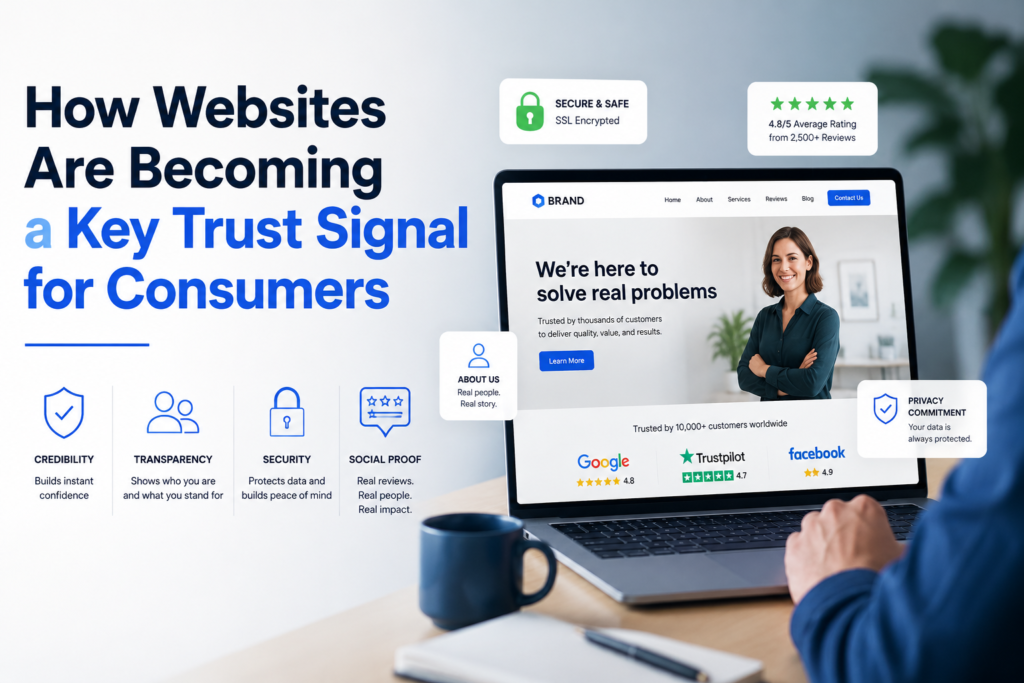
How Websites Are Becoming a Key Trust Signal for Consumers
Imagine discovering a business online that offers exactly what you need. You search for its website, but the page looks outdated, important information is missing, and there is no clear way to contact the company. Would you feel confident choosing that business? Today, consumers often explore a company’s website before deciding whether to trust its products or services. A website is no longer just a digital address; it is an important part of how people evaluate a brand. Strong website credibility can help businesses establish confidence, communicate professionalism, and create meaningful customer relationships. As digital interactions continue to shape purchasing decisions, having a trustworthy online presence has become essential for businesses of every size. Why Consumer Trust Matters in Today’s Digital World Consumers have more choices than ever before. Whether they are purchasing a product, booking a service, or choosing a business partner, they can compare multiple brands within minutes. However, having more choices also means consumers need reasons to feel confident about their decisions. They want to know whether a business is genuine, whether its services are reliable, and whether their personal information will be handled responsibly. This is where a professional website becomes important. Consumers Research Before They Buy Before making a purchase, many consumers search online to learn about a business. They explore its services, compare prices, read customer reviews, and look for information that helps them make informed decisions. For example, someone looking for a website development company may visit several agency websites before contacting one. They might compare previous projects, service descriptions, client testimonials, and contact information. A business website gives potential customers an opportunity to understand what a company offers without having to contact it first. First Impressions Influence Brand Perception A website is often one of the first places where potential customers interact with a business. Its visual appearance, navigation, content quality, and overall functionality can influence how visitors perceive the brand. A confusing layout, outdated information, or broken links may create unnecessary doubts. On the other hand, a clean and organised website communicates attention to detail and professionalism. Trust Reduces Purchase Hesitation Consumers are more comfortable engaging with businesses when they can find clear and reliable information. A trustworthy website answers common questions, explains products or services, and makes communication easy. This reduces uncertainty and helps visitors take the next step, whether that means requesting a quotation, booking a consultation, or completing a purchase. How Websites Build Consumer Trust Building consumer trust online requires more than an attractive homepage. Every part of a website contributes to the overall experience and influences how visitors evaluate a business. Here are some important ways websites help businesses establish credibility. 1. Professional Design Creates a Strong First Impression Website design plays an important role in shaping brand perception. A well-designed website uses consistent colours, readable typography, quality images, organised layouts, and intuitive navigation. These elements help visitors understand the business and explore its offerings without confusion. However, professional website design is not simply about appearance. It should also make information easy to find and important actions easy to complete. For example, an e-commerce website should make product information, pricing, shipping details, and checkout options clear. Similarly, a service-based business should make its services, expertise, and enquiry options easy to access. 2. Clear Information Builds Transparency Customers want straightforward answers before choosing a business. A credible website should clearly communicate: An informative About Us page, detailed service descriptions, transparent pricing where appropriate, and accessible policies help visitors understand what they are dealing with. When businesses communicate openly, customers have fewer reasons to question their legitimacy. 3. Website Security Protects Customer Confidence Online security is another important part of website credibility. Visitors expect businesses to handle their information responsibly, especially when they are submitting enquiry forms, creating accounts, or making payments. Some important security practices include: An HTTPS connection helps protect information exchanged between a visitor’s browser and the website. However, HTTPS alone does not prove that a business is legitimate. It should be part of a broader approach to website security and transparency. 4. Customer Reviews and Testimonials Provide Social Proof People often feel more confident when they can learn about other customers’ experiences. Genuine testimonials, verified reviews, case studies, and customer feedback can help visitors understand the quality of a business’s products or services. For example, a digital marketing agency can showcase relevant case studies explaining the client’s initial challenges, the strategy implemented, and the results achieved. Businesses should always use authentic reviews and obtain permission before publishing customer stories or photographs. Misleading testimonials can damage credibility rather than strengthen it. 5. Consistent Branding Strengthens Recognition Consistency helps consumers recognise and remember a business. A website should maintain a consistent visual identity across its pages, including its logo, colour palette, typography, imagery, and communication style. This consistency should also extend to social media profiles, advertisements, email communication, and other digital platforms. When customers encounter the same brand identity across different channels, it becomes easier to recognise the business and understand its positioning. 7 Essential Website Trust Signals Every Business Should Have Businesses can strengthen their online presence by including specific elements that help visitors evaluate their credibility. Here are seven important website trust signals worth prioritising: 1. Professional and User-Friendly Website Design A well-organised website creates a positive browsing experience. Use clear navigation, consistent branding, readable fonts, and a layout that works across different devices. 2. HTTPS and Website Security Protect website visitors through HTTPS, regular security updates, secure forms, and trusted payment solutions where applicable. 3. Clear Contact Information Display relevant contact details such as a business email address, phone number, office address where applicable, and enquiry form. Make it easy for potential customers to reach the company. 4. Authentic Customer Reviews and Testimonials Show genuine customer feedback and relevant success stories. Where possible, include the customer’s name, company, or other context with their permission. 5. About Us and Company Information Introduce the business, its team, experience, values, and purpose. Giving visitors a clearer