Evgrow

Author name: operation.evgrow@gmail.com

Uncategorized

How Websites Are Becoming a Key Trust Signal for Consumers

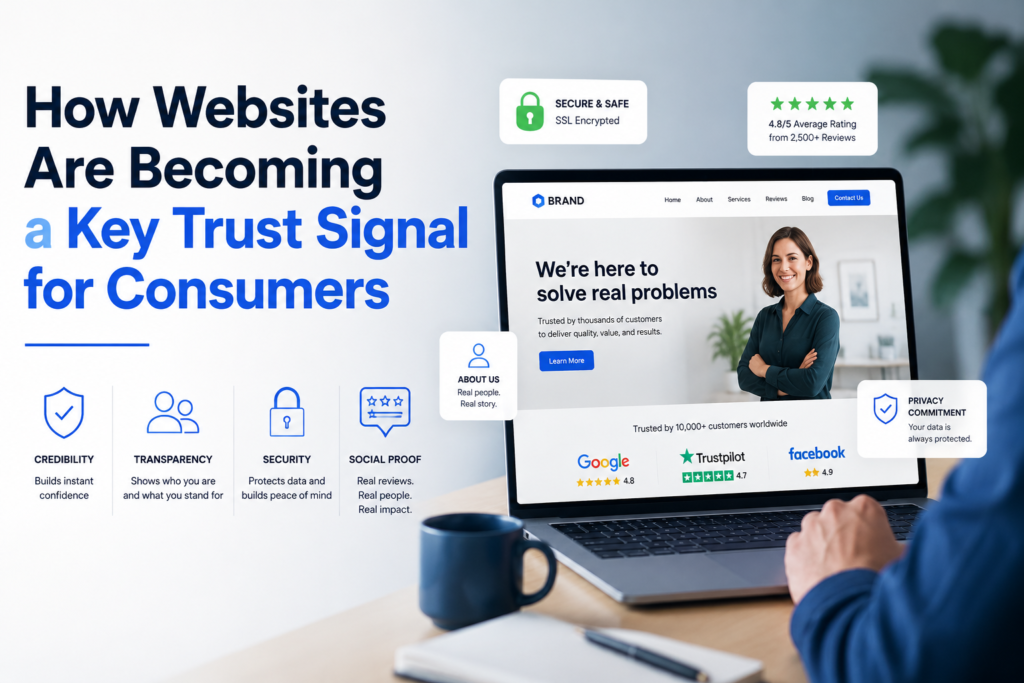
Imagine discovering a business online that offers exactly what you need. You search for its website, but the page looks outdated, important information is missing, and there is no clear way to contact the company. Would you feel confident choosing that business? Today, consumers often explore a company’s website before deciding whether to trust its products or services. A website is no longer just a digital address; it is an important part of how people evaluate a brand. Strong website credibility can help businesses establish confidence, communicate professionalism, and create meaningful customer relationships. As digital interactions continue to shape purchasing decisions, having a trustworthy online presence has become essential for businesses of every size. Why Consumer Trust Matters in Today’s Digital World Consumers have more choices than ever before. Whether they are purchasing a product, booking a service, or choosing a business partner, they can compare multiple brands within minutes. However, having more choices also means consumers need reasons to feel confident about their decisions. They want to know whether a business is genuine, whether its services are reliable, and whether their personal information will be handled responsibly. This is where a professional website becomes important. Consumers Research Before They Buy Before making a purchase, many consumers search online to learn about a business. They explore its services, compare prices, read customer reviews, and look for information that helps them make informed decisions. For example, someone looking for a website development company may visit several agency websites before contacting one. They might compare previous projects, service descriptions, client testimonials, and contact information. A business website gives potential customers an opportunity to understand what a company offers without having to contact it first. First Impressions Influence Brand Perception A website is often one of the first places where potential customers interact with a business. Its visual appearance, navigation, content quality, and overall functionality can influence how visitors perceive the brand. A confusing layout, outdated information, or broken links may create unnecessary doubts. On the other hand, a clean and organised website communicates attention to detail and professionalism. Trust Reduces Purchase Hesitation Consumers are more comfortable engaging with businesses when they can find clear and reliable information. A trustworthy website answers common questions, explains products or services, and makes communication easy. This reduces uncertainty and helps visitors take the next step, whether that means requesting a quotation, booking a consultation, or completing a purchase. How Websites Build Consumer Trust Building consumer trust online requires more than an attractive homepage. Every part of a website contributes to the overall experience and influences how visitors evaluate a business. Here are some important ways websites help businesses establish credibility. 1. Professional Design Creates a Strong First Impression Website design plays an important role in shaping brand perception. A well-designed website uses consistent colours, readable typography, quality images, organised layouts, and intuitive navigation. These elements help visitors understand the business and explore its offerings without confusion. However, professional website design is not simply about appearance. It should also make information easy to find and important actions easy to complete. For example, an e-commerce website should make product information, pricing, shipping details, and checkout options clear. Similarly, a service-based business should make its services, expertise, and enquiry options easy to access. 2. Clear Information Builds Transparency Customers want straightforward answers before choosing a business. A credible website should clearly communicate: An informative About Us page, detailed service descriptions, transparent pricing where appropriate, and accessible policies help visitors understand what they are dealing with. When businesses communicate openly, customers have fewer reasons to question their legitimacy. 3. Website Security Protects Customer Confidence Online security is another important part of website credibility. Visitors expect businesses to handle their information responsibly, especially when they are submitting enquiry forms, creating accounts, or making payments. Some important security practices include: An HTTPS connection helps protect information exchanged between a visitor’s browser and the website. However, HTTPS alone does not prove that a business is legitimate. It should be part of a broader approach to website security and transparency. 4. Customer Reviews and Testimonials Provide Social Proof People often feel more confident when they can learn about other customers’ experiences. Genuine testimonials, verified reviews, case studies, and customer feedback can help visitors understand the quality of a business’s products or services. For example, a digital marketing agency can showcase relevant case studies explaining the client’s initial challenges, the strategy implemented, and the results achieved. Businesses should always use authentic reviews and obtain permission before publishing customer stories or photographs. Misleading testimonials can damage credibility rather than strengthen it. 5. Consistent Branding Strengthens Recognition Consistency helps consumers recognise and remember a business. A website should maintain a consistent visual identity across its pages, including its logo, colour palette, typography, imagery, and communication style. This consistency should also extend to social media profiles, advertisements, email communication, and other digital platforms. When customers encounter the same brand identity across different channels, it becomes easier to recognise the business and understand its positioning. 7 Essential Website Trust Signals Every Business Should Have Businesses can strengthen their online presence by including specific elements that help visitors evaluate their credibility. Here are seven important website trust signals worth prioritising: 1. Professional and User-Friendly Website Design A well-organised website creates a positive browsing experience. Use clear navigation, consistent branding, readable fonts, and a layout that works across different devices. 2. HTTPS and Website Security Protect website visitors through HTTPS, regular security updates, secure forms, and trusted payment solutions where applicable. 3. Clear Contact Information Display relevant contact details such as a business email address, phone number, office address where applicable, and enquiry form. Make it easy for potential customers to reach the company. 4. Authentic Customer Reviews and Testimonials Show genuine customer feedback and relevant success stories. Where possible, include the customer’s name, company, or other context with their permission. 5. About Us and Company Information Introduce the business, its team, experience, values, and purpose. Giving visitors a clearer
Uncategorized

How AI Is Transforming Website Development

Artificial intelligence is changing how businesses plan, design, build, and improve their websites. Tasks that once required hours of manual work can now be supported by AI-powered tools, helping development teams work more efficiently and explore new ideas. Today, AI for web development is becoming an important part of modern digital strategy. From generating code and testing website functionality to personalizing user experiences, AI is creating new opportunities for businesses of all sizes. However, successful website development still requires human expertise, thoughtful planning, strong security, and a clear understanding of business goals. In this guide, we explore how AI is transforming website development, its key benefits, the tools businesses can consider, and the challenges they should understand before adopting AI. Whether you run a startup, manage an established company, or plan to build a new website, this article will help you understand what AI can do for your digital presence. What Is AI for Web Development? AI for web development refers to the use of artificial intelligence technologies to support tasks involved in planning, designing, building, testing, and maintaining websites. These technologies can analyze information, generate code suggestions, identify possible errors, create design concepts, and help deliver more personalized website experiences. For example, a developer can use an AI coding assistant to generate a basic website component. The developer can then review the code, test it, improve its accessibility, and adapt it to the project’s requirements. How Does AI Work in Modern Website Development? AI-powered development tools use different technologies depending on their purpose. These technologies work best when combined with clear requirements and professional oversight. AI can assist with many development tasks, but it does not automatically guarantee a secure, accessible, or high-performing website. AI is influencing several stages of the website development process. Here are seven important ways businesses and developers can benefit. 1. Faster Coding and Website Development Writing code is an essential part of website development, but some tasks are repetitive and time-consuming. AI coding assistants can help developers draft functions, explain unfamiliar code, suggest improvements, and create basic components. For example, when building a contact form, an AI tool might suggest an initial HTML structure or validation logic. A developer can then adapt it to the website’s design, backend, and security requirements. AI can help teams: Business benefit: Development teams may spend less time on routine tasks and more time improving functionality, usability, and overall quality. However, generated code should always be reviewed and tested. AI-generated output can contain errors, outdated practices, or security weaknesses. 2. Smarter Website Design and Prototyping Website design involves understanding the audience, planning the user journey, arranging content, and creating an effective visual experience. AI tools can support this process by generating layout ideas, suggesting visual directions, and helping teams explore different concepts. For example, a business launching an online store might use AI to explore product page layouts, homepage sections, or different ways to present product information. AI can assist with: Business benefit: Teams can explore more ideas early in a project and use feedback to refine the final design. AI-generated designs still need human review to ensure that the result reflects the brand, supports the target audience, and works across different devices. 3. Automated Website Testing and Debugging A website should work reliably before it goes live. Testing helps identify broken links, form errors, layout problems, and other issues that can affect visitors. AI-assisted testing tools can help generate test cases, analyze error patterns, and highlight areas that may need further investigation. For example, an online booking website may need to test form submissions, confirmation messages, navigation, and different screen sizes. Automated tests can repeat these checks and alert developers when something fails. AI-supported testing can help teams: Business benefit: Testing can become more systematic, helping teams catch issues before they affect customers. AI does not replace comprehensive quality assurance. Real-world testing, human review, security checks, and accessibility testing remain important. 4. Personalized User Experiences Different website visitors have different needs. A first-time visitor may need an introduction to a business, while a returning customer may want to find a product, check an order, or access support. AI can help websites deliver more relevant experiences when it uses appropriate information and respects user privacy. Examples include: Imagine an online store that recommends related products after a customer views a particular category. Relevant recommendations may make product discovery easier. Business benefit: Thoughtful personalization can improve navigation, engagement, and the customer journey. Businesses should be transparent about data collection, follow applicable privacy requirements, and avoid personalization that feels intrusive or unfair. 5. Improved SEO and Website Performance Search visibility depends on useful content, clear website structure, accessible pages, relevant information, and a good user experience. AI can support several parts of this process, but it cannot guarantee higher search rankings. AI-assisted tools can help development and marketing teams: For example, an AI-assisted audit may flag missing image alt text or inconsistent page titles. A developer or SEO specialist can review these findings and prioritize appropriate fixes. Website performance also matters. Developers can use analysis tools to investigate slow-loading pages, large assets, and other performance problems. AI may assist with interpreting findings, while actual improvements must be implemented and measured. Business benefit: AI can help teams organize optimization work and identify opportunities to improve website quality and discoverability. For search performance, focus on helpful, original content and sound technical implementation rather than producing large amounts of generic AI-generated text. 6. Chatbots and Intelligent Customer Support Customers often visit websites outside regular business hours. AI-powered chatbots can help answer common questions, guide visitors to relevant pages, and collect initial information about their needs. For example, a service business could use a chatbot to explain its services, answer basic pricing questions using approved information, or direct a potential customer to a contact form. Common applications include: Business benefit: A well-designed chatbot can make basic information easier to access and help businesses manage routine enquiries. Chatbots should not invent answers or make promises

Uncategorized

10 Essential Features Every Business Website Should Have

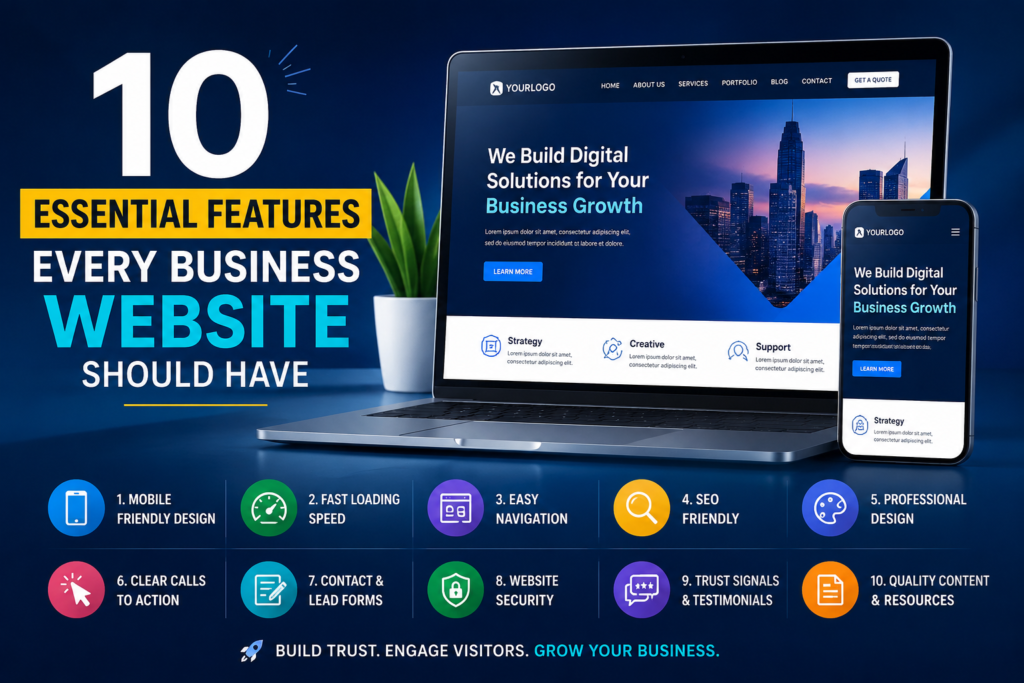
Imagine a potential customer searching for your business online. They visit your website, but it takes too long to load, looks outdated, and makes it difficult to find important information. What happens next? They may leave and choose a competitor instead. Today, having a website is not enough. Businesses need a professional, user-friendly, and well-optimized online platform that attracts visitors and turns them into customers. Whether you run a startup, a small business, or an established company, the right essential features of a business website can make a significant difference to your online growth. In this guide, we will explore 10 important business website features that improve user experience, build customer trust, strengthen your online presence, and support long-term business growth. 1. Mobile-Friendly and Responsive Design People visit websites using smartphones, tablets, laptops, and desktop computers. Your website should provide a smooth experience across all these devices. A responsive website automatically adjusts its layout, images, text, and navigation according to the visitor’s screen size. Why is responsive design important? Example: Imagine a customer searching for a software development company while travelling. If your website displays properly on their smartphone, they can explore your services and contact your team without switching devices. Google recommends responsive web design as an effective approach to building mobile-friendly websites. 2. Fast Loading Speed and Website Performance Website speed directly affects how visitors experience your business online. Nobody wants to wait several seconds just to view a homepage or open a service page. A slow website can frustrate visitors, reduce engagement, and make it harder for potential customers to explore your offerings. Important website speed optimization practices include: Google also recommends monitoring Core Web Vitals to understand real-world loading performance, responsiveness, and visual stability. Three important Core Web Vitals measurements are: Metric What it measures Good target LCP Loading performance 2.5 seconds or less INP Interaction responsiveness Below 200 ms CLS Visual stability Below 0.1 These targets help developers assess the quality of a website experience. 3. Clear and Easy Website Navigation A business website should make it easy for visitors to find what they are looking for. If users cannot understand your navigation menu, they may leave before discovering your services. Your website should have a clear structure with logically organized pages. Essential navigation menu items include: Depending on your business, you can also include pricing, FAQs, resources, or product categories. Best practices for website navigation: Example: A website development company should make it easy for visitors to explore its web development services, previous projects, company information, and contact details. Good navigation helps visitors move through your website with less effort and discover the information they need. 4. SEO-Friendly Website Structure What is the point of having a beautiful website if your potential customers cannot find it through search engines? Search Engine Optimization (SEO) helps search engines understand your website and makes your pages eligible to appear in relevant search results. An SEO-friendly website should be built with both users and search engines in mind. Important SEO features every business website should include: Example: Instead of using a confusing URL: example.com/page?id=12345 Use a descriptive URL: example.com/web-development-services/ A well-organized SEO structure helps search engines understand your website’s content and helps visitors navigate your pages. Remember, SEO-friendly development does not guarantee first-page rankings. Content quality, competition, relevance, authority, and ongoing optimization also matter. 5. Professional Design and Strong Branding Your website is often one of the first places where potential customers interact with your brand. Its design should communicate professionalism, reliability, and your company’s identity. A poorly designed website may make visitors question the quality of your business, even if your services are excellent. Important design elements include: Example: A premium IT consulting company may use a clean layout, professional typography, consistent branding, and carefully selected visuals to communicate its expertise. Your website should not simply look attractive. Every design element should support your brand message and make the customer journey easier. 6. Clear Calls to Action (CTAs) One of the most important essential features of a business website is a clear Call to Action (CTA). A CTA tells visitors what they should do next. Without clear CTAs, visitors may explore your website but leave without contacting your business. Examples of effective website CTAs: Where should you place CTAs? Example: If someone visits your website development service page, a visible “Get a Free Consultation” button can encourage them to discuss their project with your team. Make your CTA buttons easy to notice, use action-oriented language, and connect them to the right destination. 7. Contact Information and Lead Generation Forms Your website should make it simple for potential customers to reach your business. If visitors are interested in your services but cannot find your contact information, you may lose valuable business opportunities. Essential contact features include: What should a business enquiry form include? A simple lead generation form can collect: Keep forms simple. Asking for too much information can discourage visitors from submitting enquiries. You should also provide a clear privacy notice and explain how submitted information will be used. Example: A business owner looking for website development services can fill out an enquiry form and share their project requirements. Your sales team can then follow up with relevant information. 8. Website Security and SSL Certificate Website security is essential for every business, regardless of its size or industry. Customers may share personal information, contact details, or other sensitive data through your website. Your website should protect this information and provide a secure browsing experience. Important website security features include: HTTPS helps protect information exchanged between a visitor’s browser and your website. For businesses that collect customer information or process online payments, appropriate security measures and data protection practices are especially important. A secure website helps create a more trustworthy online experience and protects your business from avoidable risks. 9. Trust Signals, Testimonials and Case Studies Before choosing a company, customers often want to know whether they can trust it. Your website should provide genuine reasons for

Scroll to Top