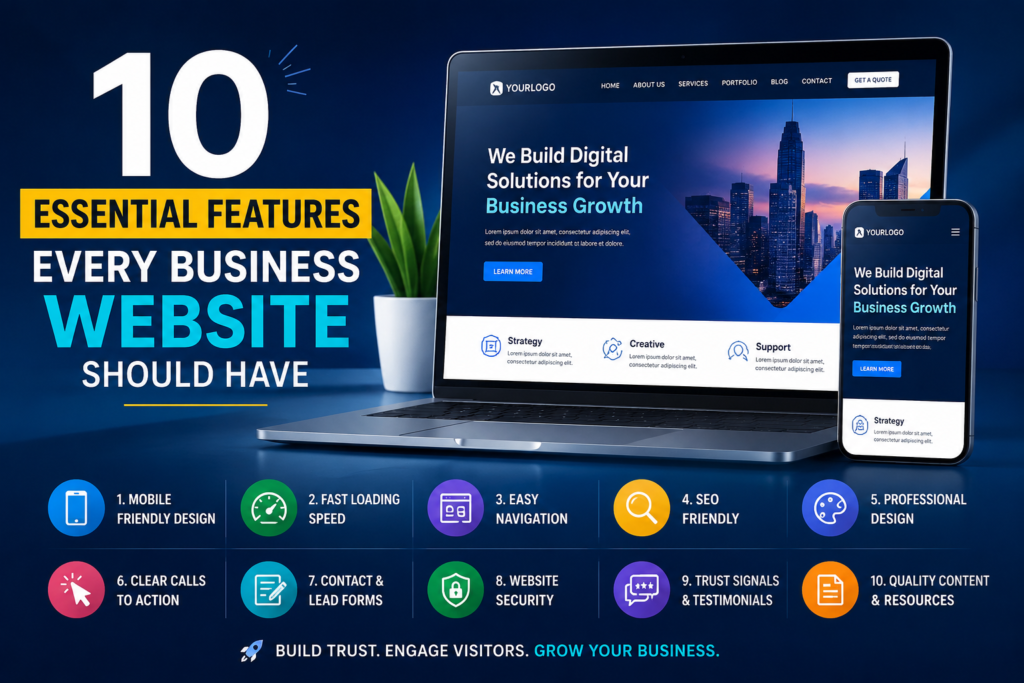
10 Essential Features Every Business Website Should Have
Imagine a potential customer searching for your business online. They visit your website, but it takes too long to load, looks outdated, and makes it difficult to find important information. What happens next? They may leave and choose a competitor instead. Today, having a website is not enough. Businesses need a professional, user-friendly, and well-optimized online platform that attracts visitors and turns them into customers. Whether you run a startup, a small business, or an established company, the right essential features of a business website can make a significant difference to your online growth. In this guide, we will explore 10 important business website features that improve user experience, build customer trust, strengthen your online presence, and support long-term business growth. 1. Mobile-Friendly and Responsive Design People visit websites using smartphones, tablets, laptops, and desktop computers. Your website should provide a smooth experience across all these devices. A responsive website automatically adjusts its layout, images, text, and navigation according to the visitor’s screen size. Why is responsive design important? Example: Imagine a customer searching for a software development company while travelling. If your website displays properly on their smartphone, they can explore your services and contact your team without switching devices. Google recommends responsive web design as an effective approach to building mobile-friendly websites. 2. Fast Loading Speed and Website Performance Website speed directly affects how visitors experience your business online. Nobody wants to wait several seconds just to view a homepage or open a service page. A slow website can frustrate visitors, reduce engagement, and make it harder for potential customers to explore your offerings. Important website speed optimization practices include: Google also recommends monitoring Core Web Vitals to understand real-world loading performance, responsiveness, and visual stability. Three important Core Web Vitals measurements are: Metric What it measures Good target LCP Loading performance 2.5 seconds or less INP Interaction responsiveness Below 200 ms CLS Visual stability Below 0.1 These targets help developers assess the quality of a website experience. 3. Clear and Easy Website Navigation A business website should make it easy for visitors to find what they are looking for. If users cannot understand your navigation menu, they may leave before discovering your services. Your website should have a clear structure with logically organized pages. Essential navigation menu items include: Depending on your business, you can also include pricing, FAQs, resources, or product categories. Best practices for website navigation: Example: A website development company should make it easy for visitors to explore its web development services, previous projects, company information, and contact details. Good navigation helps visitors move through your website with less effort and discover the information they need. 4. SEO-Friendly Website Structure What is the point of having a beautiful website if your potential customers cannot find it through search engines? Search Engine Optimization (SEO) helps search engines understand your website and makes your pages eligible to appear in relevant search results. An SEO-friendly website should be built with both users and search engines in mind. Important SEO features every business website should include: Example: Instead of using a confusing URL: example.com/page?id=12345 Use a descriptive URL: example.com/web-development-services/ A well-organized SEO structure helps search engines understand your website’s content and helps visitors navigate your pages. Remember, SEO-friendly development does not guarantee first-page rankings. Content quality, competition, relevance, authority, and ongoing optimization also matter. 5. Professional Design and Strong Branding Your website is often one of the first places where potential customers interact with your brand. Its design should communicate professionalism, reliability, and your company’s identity. A poorly designed website may make visitors question the quality of your business, even if your services are excellent. Important design elements include: Example: A premium IT consulting company may use a clean layout, professional typography, consistent branding, and carefully selected visuals to communicate its expertise. Your website should not simply look attractive. Every design element should support your brand message and make the customer journey easier. 6. Clear Calls to Action (CTAs) One of the most important essential features of a business website is a clear Call to Action (CTA). A CTA tells visitors what they should do next. Without clear CTAs, visitors may explore your website but leave without contacting your business. Examples of effective website CTAs: Where should you place CTAs? Example: If someone visits your website development service page, a visible “Get a Free Consultation” button can encourage them to discuss their project with your team. Make your CTA buttons easy to notice, use action-oriented language, and connect them to the right destination. 7. Contact Information and Lead Generation Forms Your website should make it simple for potential customers to reach your business. If visitors are interested in your services but cannot find your contact information, you may lose valuable business opportunities. Essential contact features include: What should a business enquiry form include? A simple lead generation form can collect: Keep forms simple. Asking for too much information can discourage visitors from submitting enquiries. You should also provide a clear privacy notice and explain how submitted information will be used. Example: A business owner looking for website development services can fill out an enquiry form and share their project requirements. Your sales team can then follow up with relevant information. 8. Website Security and SSL Certificate Website security is essential for every business, regardless of its size or industry. Customers may share personal information, contact details, or other sensitive data through your website. Your website should protect this information and provide a secure browsing experience. Important website security features include: HTTPS helps protect information exchanged between a visitor’s browser and your website. For businesses that collect customer information or process online payments, appropriate security measures and data protection practices are especially important. A secure website helps create a more trustworthy online experience and protects your business from avoidable risks. 9. Trust Signals, Testimonials and Case Studies Before choosing a company, customers often want to know whether they can trust it. Your website should provide genuine reasons for