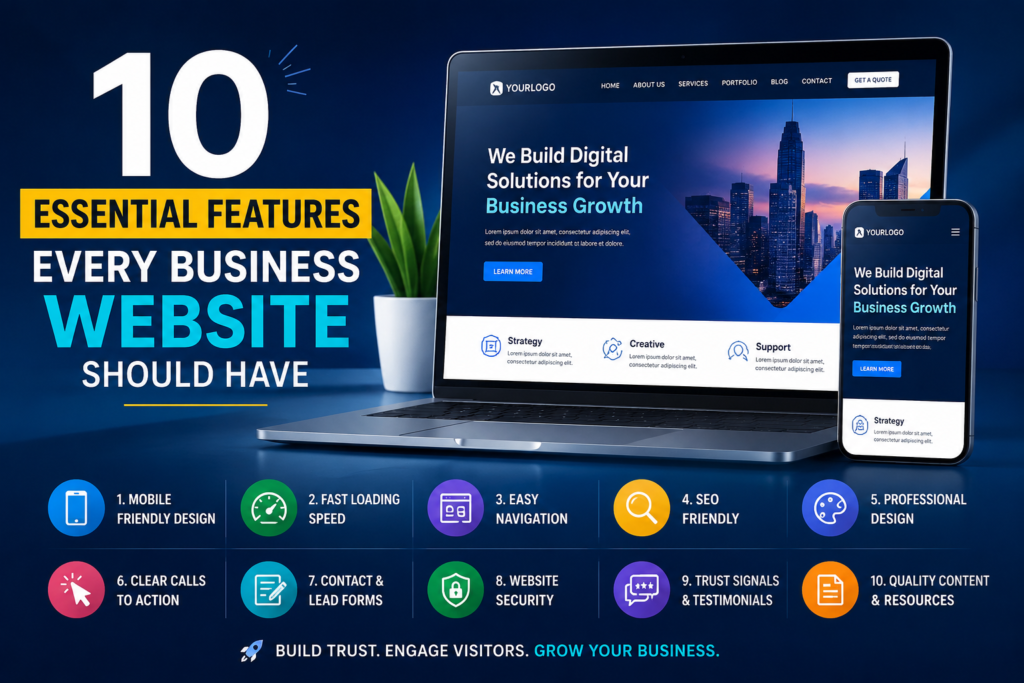
Imagine a potential customer searching for your business online. They visit your website, but it takes too long to load, looks outdated, and makes it difficult to find important information. What happens next? They may leave and choose a competitor instead.
Today, having a website is not enough. Businesses need a professional, user-friendly, and well-optimized online platform that attracts visitors and turns them into customers. Whether you run a startup, a small business, or an established company, the right essential features of a business website can make a significant difference to your online growth.
In this guide, we will explore 10 important business website features that improve user experience, build customer trust, strengthen your online presence, and support long-term business growth.
1. Mobile-Friendly and Responsive Design
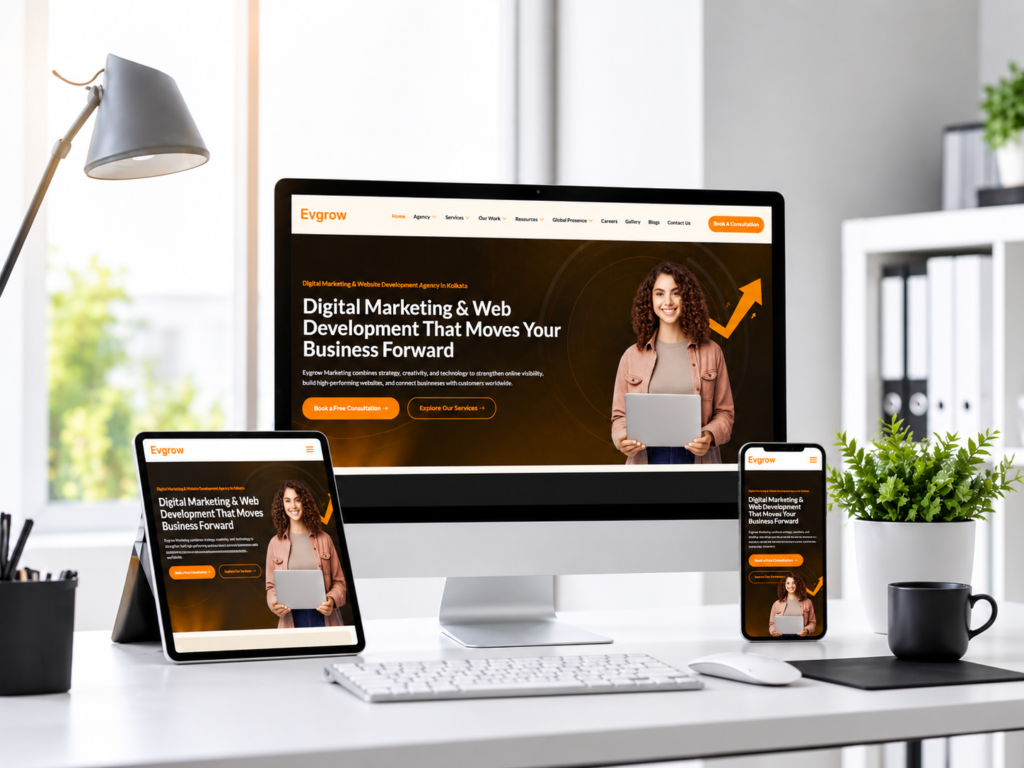
People visit websites using smartphones, tablets, laptops, and desktop computers. Your website should provide a smooth experience across all these devices.
A responsive website automatically adjusts its layout, images, text, and navigation according to the visitor’s screen size.
Why is responsive design important?
- Provides a consistent experience across devices.
- Makes website navigation easier for mobile users.
- Helps visitors access information without unnecessary zooming.
- Supports Google’s mobile-first indexing approach.
- Makes your business accessible to a wider audience.
Example: Imagine a customer searching for a software development company while travelling. If your website displays properly on their smartphone, they can explore your services and contact your team without switching devices.
Google recommends responsive web design as an effective approach to building mobile-friendly websites.
2. Fast Loading Speed and Website Performance
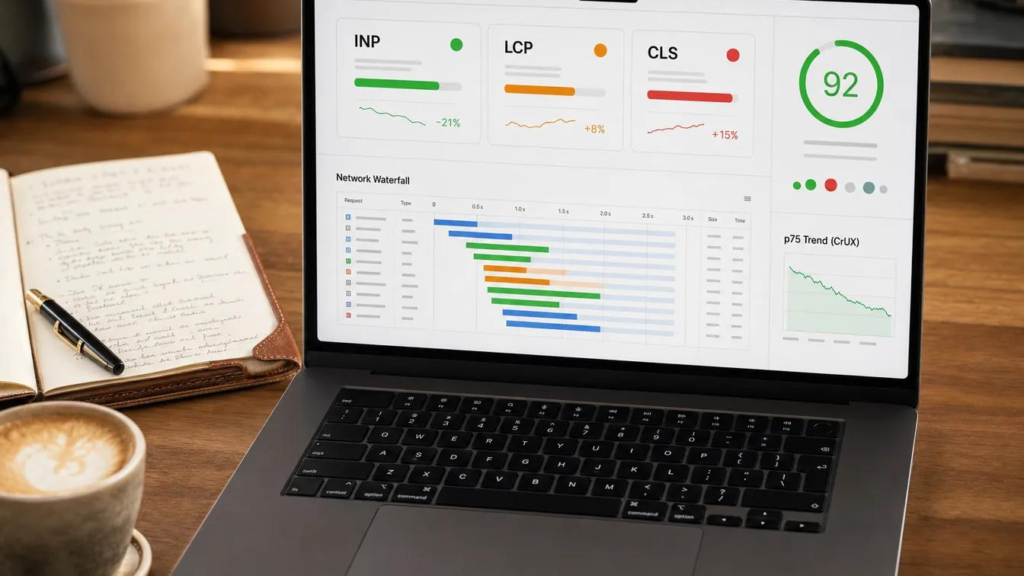
Website speed directly affects how visitors experience your business online. Nobody wants to wait several seconds just to view a homepage or open a service page.
A slow website can frustrate visitors, reduce engagement, and make it harder for potential customers to explore your offerings.
Important website speed optimization practices include:
- Compressing images without losing visual quality.
- Using reliable web hosting.
- Reducing unnecessary scripts and plugins.
- Implementing browser caching.
- Optimizing website code and resources.
- Using content delivery networks (CDNs) when appropriate.
Google also recommends monitoring Core Web Vitals to understand real-world loading performance, responsiveness, and visual stability.
Three important Core Web Vitals measurements are:
| Metric | What it measures | Good target |
|---|---|---|
| LCP | Loading performance | 2.5 seconds or less |
| INP | Interaction responsiveness | Below 200 ms |
| CLS | Visual stability | Below 0.1 |
These targets help developers assess the quality of a website experience.
3. Clear and Easy Website Navigation
A business website should make it easy for visitors to find what they are looking for. If users cannot understand your navigation menu, they may leave before discovering your services.
Your website should have a clear structure with logically organized pages.
Essential navigation menu items include:
- Home
- About Us
- Services
- Our Work or Portfolio
- Blog
- Contact Us
Depending on your business, you can also include pricing, FAQs, resources, or product categories.
Best practices for website navigation:
- Use simple and recognizable menu labels.
- Organize related pages into relevant categories.
- Keep the main navigation consistent across pages.
- Add a visible contact or enquiry button.
- Avoid unnecessary menu items.
Example: A website development company should make it easy for visitors to explore its web development services, previous projects, company information, and contact details.
Good navigation helps visitors move through your website with less effort and discover the information they need.
4. SEO-Friendly Website Structure
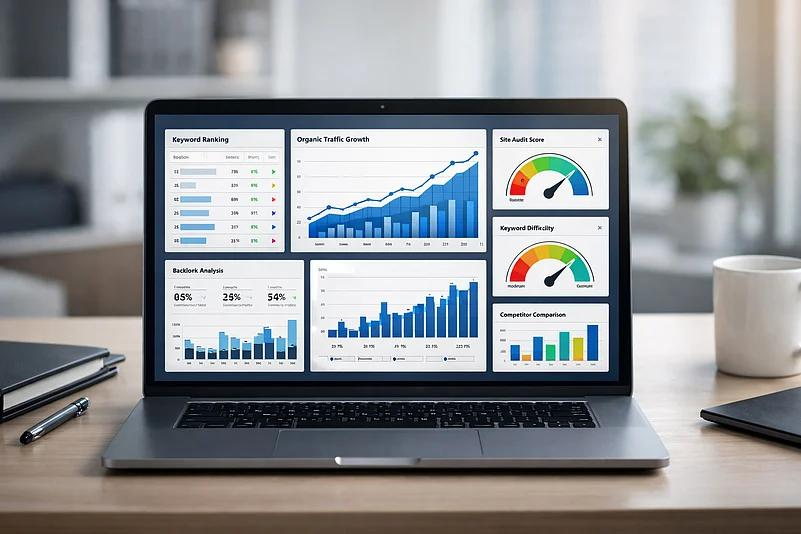
What is the point of having a beautiful website if your potential customers cannot find it through search engines?
Search Engine Optimization (SEO) helps search engines understand your website and makes your pages eligible to appear in relevant search results.
An SEO-friendly website should be built with both users and search engines in mind.
Important SEO features every business website should include:
- SEO-friendly URLs.
- Proper H1, H2, and H3 heading structures.
- Unique title tags and meta descriptions.
- Descriptive image alt text.
- XML sitemap.
- Robots.txt configuration.
- Internal linking between relevant pages.
- Proper canonical tags where needed.
- Structured data where relevant.
- Accessible and crawlable website content.
Example:
Instead of using a confusing URL:
example.com/page?id=12345
Use a descriptive URL:
example.com/web-development-services/
A well-organized SEO structure helps search engines understand your website’s content and helps visitors navigate your pages.
Remember, SEO-friendly development does not guarantee first-page rankings. Content quality, competition, relevance, authority, and ongoing optimization also matter.
5. Professional Design and Strong Branding
Your website is often one of the first places where potential customers interact with your brand. Its design should communicate professionalism, reliability, and your company’s identity.
A poorly designed website may make visitors question the quality of your business, even if your services are excellent.
Important design elements include:
- A consistent brand colour palette.
- Professional typography.
- High-quality images and graphics.
- Clear headings and readable text.
- Consistent layouts across pages.
- Proper spacing and visual hierarchy.
- A recognizable company logo.
Example: A premium IT consulting company may use a clean layout, professional typography, consistent branding, and carefully selected visuals to communicate its expertise.
Your website should not simply look attractive. Every design element should support your brand message and make the customer journey easier.
6. Clear Calls to Action (CTAs)
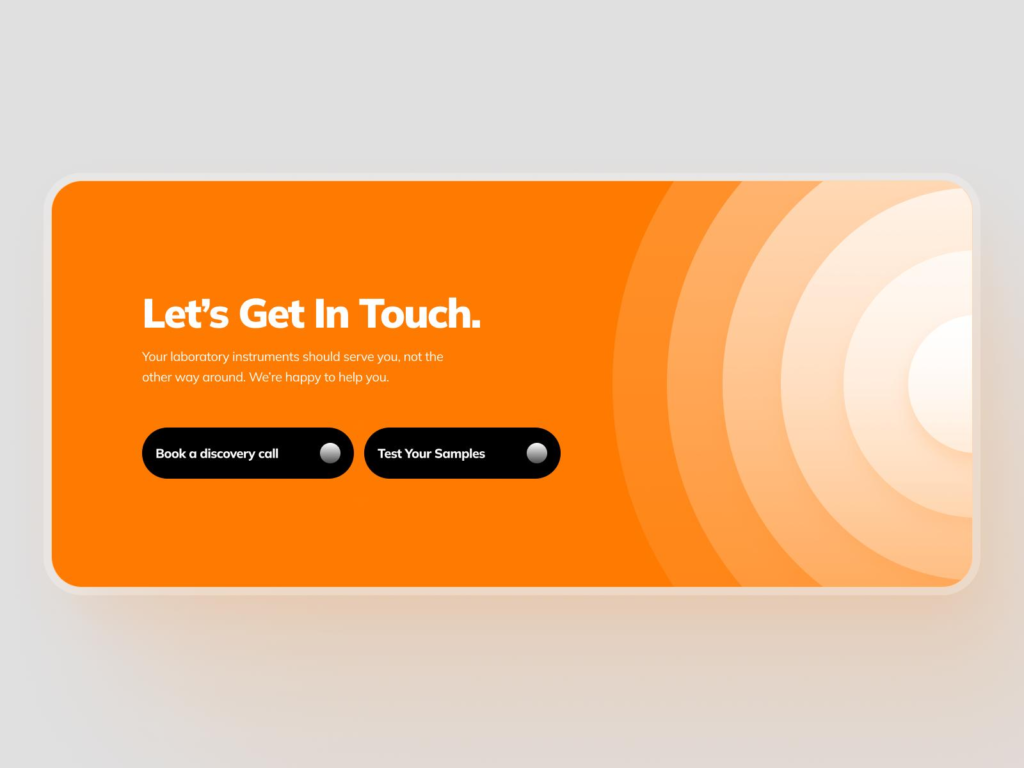
One of the most important essential features of a business website is a clear Call to Action (CTA).
A CTA tells visitors what they should do next. Without clear CTAs, visitors may explore your website but leave without contacting your business.
Examples of effective website CTAs:
- Get a Free Consultation
- Request a Quote
- Contact Our Team
- Book a Meeting
- Explore Our Services
- Get Started Today
Where should you place CTAs?
- Homepage hero section.
- Service pages.
- Landing pages.
- Blog posts.
- Website footer.
- Contact sections.
Example: If someone visits your website development service page, a visible “Get a Free Consultation” button can encourage them to discuss their project with your team.
Make your CTA buttons easy to notice, use action-oriented language, and connect them to the right destination.
7. Contact Information and Lead Generation Forms
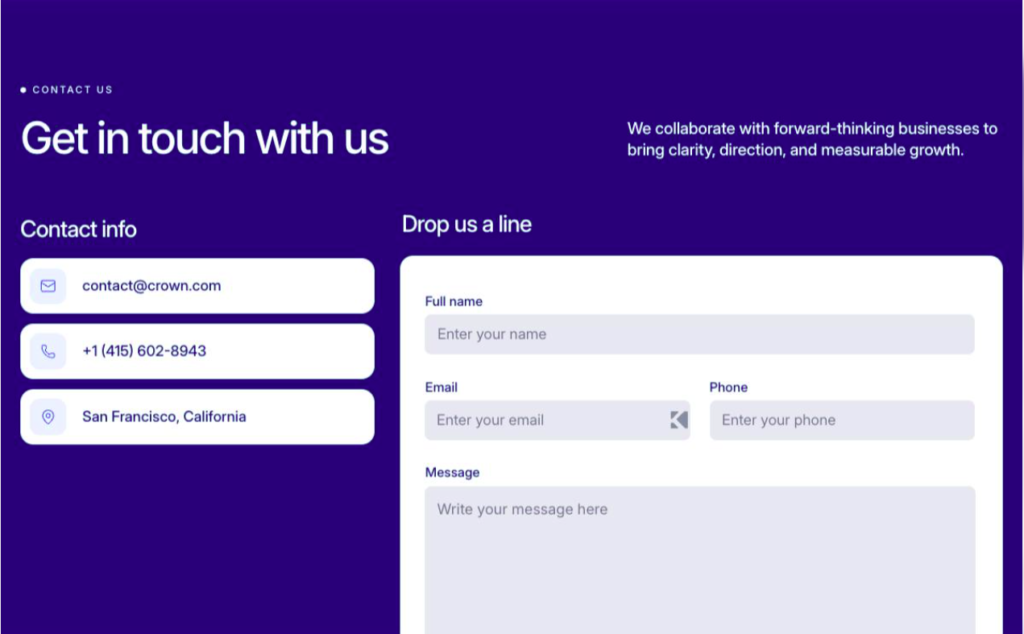
Your website should make it simple for potential customers to reach your business.
If visitors are interested in your services but cannot find your contact information, you may lose valuable business opportunities.
Essential contact features include:
- Business email address.
- Contact number, where appropriate.
- Contact or enquiry form.
- Business address, if relevant.
- Social media links.
- WhatsApp contact option, where suitable.
- Google Maps integration for businesses with physical locations.
What should a business enquiry form include?
A simple lead generation form can collect:
- Full Name
- Business Email
- Phone Number (optional where appropriate)
- Company Name
- Service Required
- Project Details or Message
Keep forms simple. Asking for too much information can discourage visitors from submitting enquiries.
You should also provide a clear privacy notice and explain how submitted information will be used.
Example: A business owner looking for website development services can fill out an enquiry form and share their project requirements. Your sales team can then follow up with relevant information.
8. Website Security and SSL Certificate
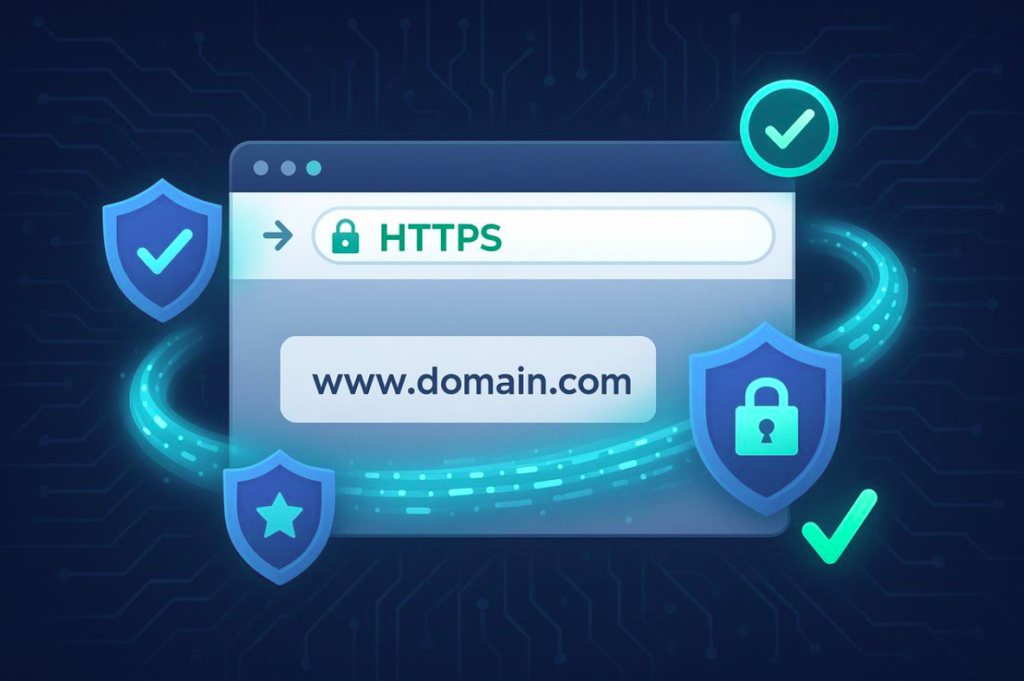
Website security is essential for every business, regardless of its size or industry.
Customers may share personal information, contact details, or other sensitive data through your website. Your website should protect this information and provide a secure browsing experience.
Important website security features include:
- SSL/TLS certificates for HTTPS connections.
- Secure website hosting.
- Regular software and plugin updates.
- Strong administrator passwords.
- Regular website backups.
- Spam protection for contact forms.
- Access controls and appropriate security monitoring.
HTTPS helps protect information exchanged between a visitor’s browser and your website.
For businesses that collect customer information or process online payments, appropriate security measures and data protection practices are especially important.
A secure website helps create a more trustworthy online experience and protects your business from avoidable risks.
9. Trust Signals, Testimonials and Case Studies
Before choosing a company, customers often want to know whether they can trust it.
Your website should provide genuine reasons for visitors to feel confident about your business, services, and experience.
Useful trust-building elements include:
- Genuine customer testimonials.
- Verified customer reviews.
- Previous projects and portfolio.
- Detailed case studies.
- Industry certifications.
- Relevant awards and recognitions.
- Client feedback and success stories.
- Clear company information.
Why are case studies important?
Case studies demonstrate how your business approaches real challenges and delivers solutions.
For example, a website development agency can showcase a project by explaining:
- The client’s business requirements.
- The challenges involved.
- The website development approach.
- The final project outcome.
Use genuine customer feedback and accurate project information. Never publish fabricated reviews or unsupported performance claims.
Trust signals help potential customers understand your experience before making an enquiry.
10. High-Quality Content and Valuable Resources
A professional business website needs useful content that answers customer questions and explains your expertise.
Your website content should help visitors understand what you offer, who you serve, and why your services may be relevant to their needs.
Important content sections include:
- Informative homepage content.
- Detailed service descriptions.
- About Us page.
- Frequently Asked Questions.
- Blog articles.
- Portfolio and project descriptions.
- Industry insights and resources.
- Clear company contact information.
Why should businesses maintain a blog?
A regularly updated blog gives your business opportunities to address customer questions, target relevant search terms, and demonstrate industry knowledge.
For example, a website development agency could publish articles about:
- How to Choose the Right Website Development Company.
- How a Professional Website Helps Businesses Grow Globally.
- Essential Features Every Business Website Should Have.
- Website Design Trends Businesses Should Know.
- How Website Performance Affects User Experience.
Focus on original, helpful, accurate content rather than publishing articles simply to include keywords.
Google’s SEO guidance emphasizes creating useful, reliable, people-first content.
Additional Features That Can Improve Your Business Website
The 10 features above provide a strong foundation. Depending on your business model and target audience, you may also benefit from additional website functionality.
| Additional feature | Business benefit |
|---|---|
| Live Chat Integration | Helps visitors ask questions |
| WhatsApp Integration | Makes communication easier |
| Analytics Integration | Tracks website performance |
| CRM Integration | Helps manage customer enquiries |
| Social Media Integration | Connects your digital channels |
| Multilingual Support | Serves international audiences |
| Online Booking System | Simplifies appointment scheduling |
| E-commerce Functionality | Supports online product sales |
Not every business needs all these features. Choose functionality based on your customers’ needs and your business goals.
How to Choose the Right Website Development Partner
Building a successful website requires more than choosing an attractive template. You need a development partner who understands your business objectives, target audience, and long-term growth plans.
Before selecting a website development company, consider the following:
1. Review Their Portfolio
Explore previous projects to understand their design quality, development experience, and industry expertise.
2. Check Their Technical Capabilities
Make sure they understand responsive design, website performance, SEO-friendly development, and website security.
3. Understand Their Development Process
Ask how they handle planning, design, development, testing, and website launch.
4. Discuss Your Business Goals
Your website should support your business objectives, whether that means generating leads, selling products, building brand awareness, or reaching international customers.
5. Ask About Ongoing Support
Discuss website maintenance, updates, security monitoring, and technical support after launch.
Choosing the right development partner can help you build a website that supports your business today and grows with your future requirements.
Conclusion
A successful business website is a combination of professional design, strong functionality, user experience, security, and search engine optimization. From responsive layouts and fast loading speeds to effective CTAs and valuable content, every feature plays an important role in creating a better online experience.
Investing in the right essential features of a business website can help your company build credibility, attract potential customers, and create more opportunities for growth.
At Evgrow Global, we believe your website should do more than represent your business online. It should support your digital presence and business objectives. If you are planning to build a new website or improve your existing one, explore our website development solutions and take the next step towards building a stronger online presence.
Ready to build a professional business website? Connect with Evgrow Global and let’s discuss your project.
Frequently Asked Questions (FAQs)
1. What are the most important features of a business website?
The most important features include responsive design, fast loading speed, easy navigation, SEO-friendly structure, professional branding, clear CTAs, contact forms, website security, customer testimonials, and high-quality content.
2. Why does every business need a professional website?
A professional website helps businesses establish an online presence, showcase their services, build customer trust, share important information, and generate potential leads.
3. Is mobile-friendly design important for a business website?
Yes. Mobile-friendly design ensures that visitors can easily browse your website using smartphones and tablets. It also supports Google’s mobile-first indexing approach.
4. How does SEO help a business website?
SEO helps search engines understand your website and improves its opportunities to appear in relevant search results. It can attract organic visitors who are actively searching for your products, services, or information.
5. What makes a business website user-friendly?
A user-friendly website offers simple navigation, readable content, responsive layouts, fast loading speeds, accessible contact information, and clear calls to action.
6. How can a business website generate leads?
A business website can generate leads through enquiry forms, consultation buttons, contact information, WhatsApp integration, landing pages, and useful content that encourages visitors to take action.
7. How often should a business website be updated?
Businesses should regularly review their website content, software, plugins, security, and performance. Service information, company details, and outdated content should be updated whenever necessary.
8. Does every business website need a blog?
A blog is not essential for every business, but it can be valuable for companies that want to answer customer questions, demonstrate expertise, and build organic search visibility over time.